
DPRK-Linked Supply-Chain Attacks Move C2 Into Web3
Palo Alto Unit 42 details how poisoned open-source packages and blockchain-based C2 expose cloud credentials through developer workflows.

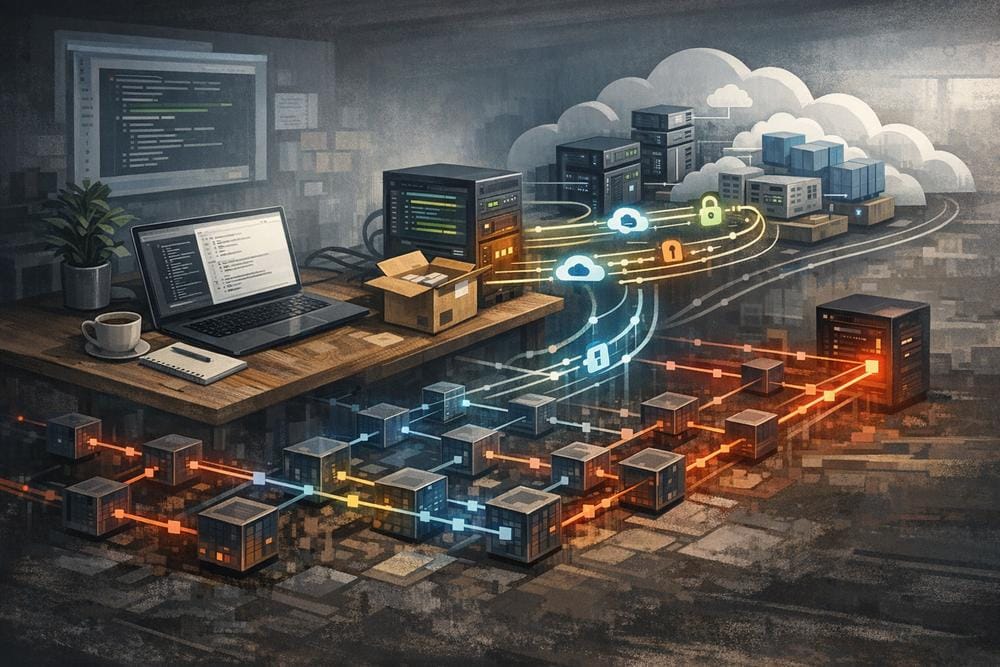
Open-source software has become a high-value path into enterprise cloud environments because developer workstations and CI/CD runners often hold credentials with access far beyond a single application. Palo Alto Unit 42’s analysis describes a further evolution of this risk: DPRK-linked activity that combines poisoned packages and developer-workflow automation with command-and-control (C2) resolution through blockchain networks.
The central concern is not simply that a package contains malicious code. It is that the package may execute inside a trusted build context, access short-lived cloud credentials or deployment secrets, and then locate its next communication endpoint without relying on a conventional domain or fixed IP address. That combination challenges controls based primarily on package scanning, DNS monitoring and static indicator blocklists.
Unit 42 attributes the broader activity to North Korea-affiliated actors, including Alluring Pisces, also known as Sapphire Sleet or Midnight Neptune. The organization discusses several related operations, including the ChainDrop npm worm, the PolinRider campaign, and compromises involving Axios, Mastra AI and Rust’s arrayref package. These examples are presented as part of a broader shift toward using open-source registries as an initial-access route into corporate environments.
Why developer environments are an attractive target
Software dependencies are commonly installed and executed on systems that can reach internal repositories, cloud APIs and release infrastructure. A developer endpoint or build runner may also have access to service-account credentials, federated identity tokens, signing material or environment variables used during deployment.
According to Unit 42, current supply-chain malware prioritizes this information during dependency resolution. The objective is not necessarily to compromise a public-facing application directly. Instead, the attacker uses a package installation or build event to place code inside a workflow that already possesses useful permissions.
This approach can weaken the value of perimeter authentication. If a malicious package runs after a legitimate developer or automated runner has authenticated to cloud services, the attacker may be able to reuse credentials from that trusted context. Unit 42 says stolen credentials may provide access to cloud management consoles and APIs, potentially bypassing multifactor authentication when additional controls are absent. The report does not establish that every affected environment or credential would have such access; permissions depend on the organization’s identity design.
Two supply-chain patterns highlighted by Unit 42
ChainDrop and lifecycle execution
Unit 42 links ChainDrop to the Shai-Hulud family and reports that it affected more than 400 npm packages, including keyv and cacheable-request. The worm uses a preinstall hook to download a custom Bun runtime and launch an obfuscated credential-harvesting component.
The reported collection behavior extends beyond static files. Unit 42 says ChainDrop searches memory in running build processes for ephemeral cloud IAM keys, CI/CD worker tokens and short-lived OIDC federation keys. After the collection activity, the runner terminates. This is significant because short-lived credentials may not appear in traditional disk-focused investigations, while process memory and build logs may provide the more useful evidence.
For persistence, the campaign injects task hooks that execute when a developer opens a project or starts an AI coding session, according to the research. That behavior broadens the exposure from one installation event to recurring developer activity.
PolinRider and cross-registry delivery
The PolinRider campaign, as described by Unit 42, spans several package ecosystems, including npm, Go modules and Packagist. Its loaders can be concealed in repository configuration files, web resources and IDE workspace automation rather than relying only on conventional package-install scripts.
When a workspace is loaded, the hidden automation can run in the background, collect developer credentials, cloud session tokens and environment secrets, and establish persistence in enterprise build pipelines. The campaign’s reach across registries matters because organizations may protect one ecosystem more closely than another while sharing the same developers, runners and cloud accounts.
Unit 42 reports that different PolinRider variants use blockchain-based mechanisms to resolve C2 endpoints. The described methods include transaction queries across TRON, Aptos and Binance Smart Chain, as well as a technique called NullReceiver. The report says these mechanisms can be combined so that one route serves as a fallback when another is blocked.
How blockchain-based C2 changes the detection problem
The research describes three stages in the evolution of these mechanisms.
EtherHiding: Earlier implementations used a hardcoded smart-contract address and read-only blockchain calls to retrieve encrypted endpoint information from contract state. This avoids depending on ordinary DNS resolution, but the fixed contract address remains a detectable and blockable feature.
Transaction-data hiding: Later variants moved information into the input data of ordinary blockchain transactions. The loader reads transaction history or transaction data, extracts the encrypted content and resolves the current endpoint. Unit 42 says PolinRider variants use fallback routes across multiple chains, allowing operators to publish a new transaction on another network if a route is disrupted.
NullReceiver: The most data-minimized method described by Unit 42 removes smart contracts and transaction payloads from the lookup process. The loader queries an actor-controlled wallet for its latest zero-value transaction and derives an IPv4 address from the recipient address structure. Because the transaction contains no value or data, conventional content inspection has less to examine.
These approaches do not make the malware invisible. They shift the detection opportunity from static infrastructure to behavior: an ordinary development tool, script engine or compiler unexpectedly contacting public blockchain gateways; a build runner making blockchain queries; or a workspace configuration changing in a way that introduces unauthorized automation.
Reported links to DPRK-linked activity
Unit 42 assesses that North Korean state-sponsored actors are using open-source registries as a strategic initial-access channel rather than only as an opportunistic source of credentials. The report cites activity associated with Alluring Pisces and describes a shared infrastructure footprint across several operations.
In the Axios case, Unit 42 says the lead maintainer was compromised and a backdoored dependency named plain-crypto-js was added to the package manifest. The payload executed in enterprise build pipelines, where it targeted cloud tokens and macOS code-signing certificates.
In the Mastra AI campaign, poisoned npm packages used build execution hooks to collect environment variables and cloud keys. In the Rust arrayref case, the report says the package was poisoned on crates.io and used Rust’s native compilation hook to launch a second-stage payload during project builds.
Unit 42 presents matching C2 beacon behavior, SSL configurations and clustered VPS hosting ranges as links among the operations. Those are the organization’s reported assessment signals; the supplied research does not provide specific domains, IP addresses or certificate values for publication here. It also does not assign MITRE ATT&CK technique identifiers or identify a CVE associated with the activity.
What organizations should do now
- Establish whether blockchain traffic is expected. For organizations that do not operate Web3 services, outbound connections from developer systems or CI/CD runners to public blockchain gateways should receive focused review. A blanket assumption that all such traffic is malicious would be inappropriate for Web3 businesses, so the policy should be based on documented business requirements.
- Inspect process and network context together. Endpoint and network controls should correlate the originating process, user, workspace and destination. Particular attention is warranted when package managers, scripting engines, compilers or common development runtimes initiate unexpected blockchain-related traffic.
- Audit package lifecycle behavior. Review preinstall, postinstall and compilation hooks before execution. Automated controls should flag unexpected changes to package manifests, repository configuration files and IDE workspace automation.
- Protect CI/CD credentials. Reduce runner permissions, separate build and deployment identities, limit the lifetime of tokens and avoid exposing broad secrets to untrusted build steps. Short-lived credentials still require protection because Unit 42 reports that some campaign components search process memory for them.
- Monitor for workspace persistence. Compare repository and developer-environment configuration against approved baselines. Unexpected task hooks or automation that runs when a project opens should be investigated, especially when introduced by a dependency update.
- Use behavioral hunting in addition to IOCs. Search for package installation followed by credential access, memory inspection, unusual child processes, runner termination or outbound blockchain queries. Static indicators remain useful, but the research indicates that endpoint and C2 details can change dynamically.
- Review registry and maintainer trust. Pin approved versions, require review for dependency and manifest changes, use provenance and integrity controls where available, and monitor maintainer or package-scope changes. These measures reduce the likelihood that a trusted package update silently becomes an execution path.
What remains unconfirmed
The research establishes a set of reported campaigns, package ecosystems and C2-resolution patterns, but it does not provide a universal attack sequence for every variant. The exact cloud services accessed in a given intrusion, the permissions of stolen credentials, the full set of affected organizations and the volume of data taken will vary by deployment and are not fully specified in the supplied material.
Organizations should therefore avoid treating the named packages or campaigns as an exhaustive blocklist. The more durable lesson is architectural: dependency execution occurs in privileged environments, while C2 can be made dynamic enough to frustrate conventional infrastructure-based detection.
Conclusion
Palo Alto Unit 42’s analysis shows how open-source supply-chain attacks can connect package poisoning, developer-workflow persistence and cloud credential theft with blockchain-assisted C2. The DPRK-linked activity described in the report raises the defensive priority of CI/CD runner isolation, package-change governance and process-aware monitoring.
For most organizations, the practical response is not to block an isolated indicator and consider the problem closed. It is to determine which development actions are legitimate, enforce least privilege around build identities, and investigate unexpected blockchain activity in the context of the process that generated it.
Sources
Palo Alto Unit 42: Evolution of Web3 in Cloud Supply Chain Attacks