

Black Friday Scams Turn Brand Trust Into an Attack Surface
Kaspersky’s 2026 research shows how seasonal shopping, gaming and wellness lures drive phishing, fraud and financial malware campaigns.

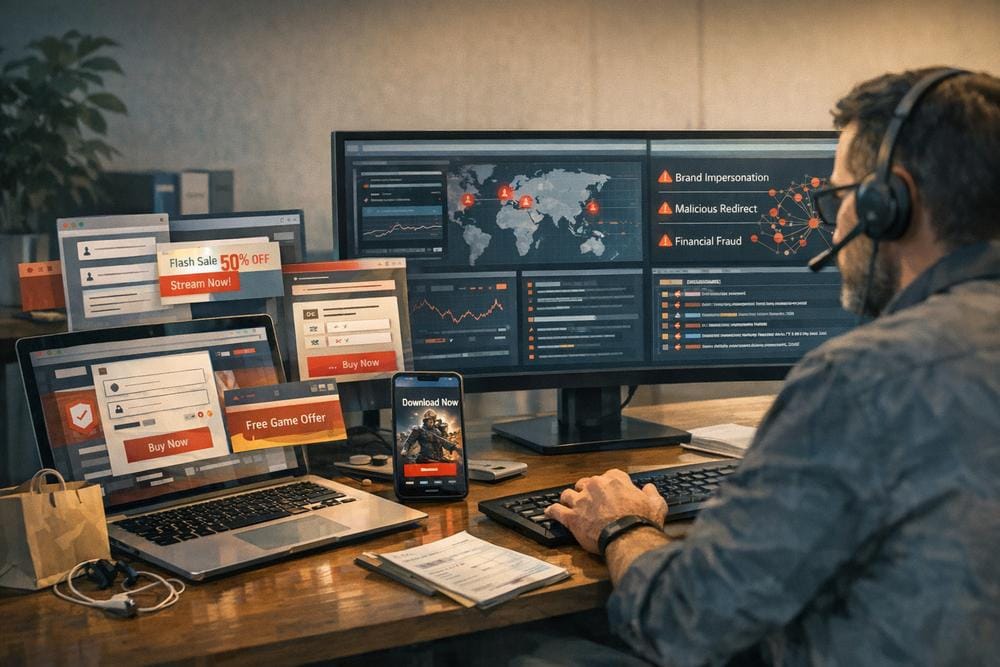
Seasonal promotions create a predictable opportunity for cybercriminals: consumers are already expecting urgent offers, account notifications, delivery messages and payment requests. Kaspersky’s 2026 analysis shows how that expectation is being converted into phishing, fraud, spam and financial-malware activity aimed at shoppers, gamers and users of subscription services.
The research, published by Kaspersky on Securelist, covers anonymized data from Kaspersky Security Network users collected primarily between January and October 2026, with additional observations covering later seasonal activity. The report does not identify a single coordinated threat actor. Instead, it describes recurring financially motivated campaigns that reuse trusted brands, promotional urgency and current consumer interests.
The central risk is trust, not technical complexity
Many of the campaigns documented by Kaspersky use familiar attack patterns: a message, advertisement or social-media link sends a user to a counterfeit website; the site imitates a retailer, payment provider, streaming service or gaming platform; and the victim is prompted to enter credentials, card information or other personal details.
Kaspersky says fraudulent pages commonly reproduce legitimate layouts, fonts, branding and alternative sign-in options. In these cases, the credential form is the main interactive component, and information entered by the user is sent to the operators of the fraudulent site. A compromised shopping account may expose purchase history and stored payment methods, while reused passwords can put unrelated accounts at risk.
Other campaigns use a more aggressive form of social engineering. Kaspersky observed fake Apple support pages that displayed alarming messages about an alleged Apple Pay pre-authorization and urged visitors to call a support number. According to the research, fake operators could then attempt to obtain sensitive information or persuade victims to grant remote access. The report does not provide a phone number or other infrastructure indicator for this activity.
Scale of the shopping and payment threat
Kaspersky recorded 19,063,077 attempts to access phishing links targeting users of online stores, payment systems and banks between January and October 2026. The detailed section of the report compares this with 6,394,854 attempts during the same period in 2025 and describes a 198.1% increase. However, the report’s summary also characterizes the year-on-year change as 1%. Because these figures are inconsistent, the precise growth rate should be treated cautiously; the reported volume of activity remains the clearer finding.
Within the detailed breakdown, 44.54% of the attempts targeted online shoppers, 28.55% targeted banking users and 26.91% involved pages mimicking payment systems. The report says the online-shopping share was lower than in 2025, while the banking and payment-system shares increased.
Brand impersonation was a dominant pattern. Kaspersky detected 3,102,304 attempts involving Amazon branding, 360,949 involving Alibaba-owned brands such as AliExpress, 163,381 involving eBay, 109,081 involving Mercado Libre and 74,220 involving Walmart. The figures represent Kaspersky detections, not confirmed victim losses.
Across online-store and subscription-service phishing, Kaspersky identified Amazon, Apple, Netflix, Shopify and Alibaba Group-associated brands as the five most frequently abused names. Together, they accounted for 7,119,400 detections, or 83.83% of the category in the report’s data. Amazon accounted for 36.53% and Apple-related resources for 19.1%. Netflix-themed detections reached 1,365,648, which Kaspersky reports as a 70.5% increase from 2025.
How the seasonal campaigns reach users
Email remains an important delivery channel, but the research describes a broader ecosystem involving promotional traffic, fraudulent stores, social platforms, advertisements and informal messaging channels. During the first two weeks of November, Kaspersky detected 220,071 sales-themed spam messages, 50.18% more than during the comparable period in 2025. It also identified 1,728 messages referencing Singles’ Day promotions in Asia.
Several recurring flows appear in the report:
- Impersonated login pages: A message or link leads to a counterfeit retailer, subscription or platform login page. Credentials entered into the page are collected by the scammers.
- Fake payment or support pages: A supposed discount, account alert or payment problem prompts the user to submit card information or contact a fraudulent support channel.
- Nonexistent products and subscriptions: A dramatically discounted phone, streaming bundle or gaming offer collects payment or personal information, but the promised product or service is not delivered.
- Prize and giveaway flows: A retail-themed game or guaranteed prize leads to a request for personal or card details, sometimes framed as a delivery charge.
Kaspersky also observed campaign pages that use limited-time language, countdowns, scarcity claims, fabricated reviews and personalized greetings. These elements do not demonstrate that an offer is genuine; they are persuasion techniques designed to shorten the time available for verification.
Gaming lures add malware risk
The report identifies Grand Theft Auto VI-related content as a major lure for the gaming community during the 2026 shopping season. Between June and November 2026, Kaspersky detected 27,416 attacks involving malware or potentially unwanted applications posing as GTA VI-related content.
The research distinguishes these malware campaigns from purchase scams. Malware-themed activity used the attention around the game to disguise suspicious files as related content, while phishing campaigns used buying intent and urgency to direct users to fake stores. One example described by Kaspersky offered Brazilian users a PlayStation subscription bundle allegedly including GTA VI and accepted payment through a bank card or Pix. The reported outcome was that the buyer received neither the console-related service nor the game.
Other gaming schemes included a fake Steam gift-card promotion that requested account credentials and a Discord-themed flow that displayed a prompt to install a supposed security module. Kaspersky says clicking the installation prompt downloaded a suspicious file. The supplied research does not identify the file name, malware family, command-and-control infrastructure or a confirmed victim set, so those details remain unknown.
Subscription, wellness and beauty themes broaden the reach
Streaming services were attractive lures because consumers associate them with recurring payments, account access and seasonal discounts. Kaspersky observed fraudulent Netflix pages that either collected personal and payment information or offered nonexistent discounted subscriptions. In some cases, the campaign operators contacted victims through WhatsApp to request additional information or money. Spotify and YouTube Premium were also used in pages designed to collect credentials or payment details.
Health, wellness and beauty themes followed a similar formula. Kaspersky found spam promoting questionable weight-loss telehealth services, including pages that claimed large numbers of patients and doctors and invited users to complete a short qualification assessment. The report says such sites may seek personal or medical data, money or sales of dubious products, but it does not establish a single outcome for every campaign.
Beauty-themed pages used fabricated celebrity endorsements, artificial comments, counterfeit retailer branding, implausible discounts and scarcity messages. These examples illustrate an important defensive point: content that appears lifestyle-oriented may still be a payment-fraud or data-collection operation.
Banking Trojans remain a separate technical threat
Kaspersky recorded 801,150 banking-Trojan attacks during the first ten months of 2026, compared with more than 1.09 million in 2025. The report says the figures include globally active banking malware as well as malware affecting ATMs and point-of-sale systems, while excluding some older Trojan families that no longer primarily perform banking-Trojan functions.
According to Kaspersky, PC banking malware can monitor browser activity, inject content into legitimate sessions, intercept credentials and card data, and in some cases manipulate payment or cryptocurrency transactions. Mobile banking malware commonly targets banking and shopping applications and may seek credentials or interfere with transactions.
The report names GoPix, JanelaRAT, Horabot and BeatBanker as examples observed in the broader financial-threat landscape. Kaspersky describes GoPix as a Brazilian banking Trojan delivered through Google Ads malvertising and designed to abuse Pix, Boleto and cryptocurrency transactions. JanelaRAT targeted online banking users in Brazil and Mexico; Horabot appeared in multistage campaigns involving banking malware and email-based propagation; and BeatBanker was an Android banker active in Brazil, distributed through a fake Google Play page and bundled with a cryptocurrency miner. These are source-reported descriptions, not evidence that every named family was used in every Black Friday campaign.
What organizations should do now
Protect the identity layer. Require phishing-resistant multifactor authentication where practical, especially for administrators, finance teams and users with access to payment systems. Block known-compromised credentials and monitor for password reuse. Treat an unusual login, new device or unexpected recovery change as a signal for review.
Strengthen email and web controls. Use layered spam, URL and attachment filtering, sandboxing where available, and domain-reputation controls. Ensure that protective tools cover personal webmail and browser activity on managed endpoints, not only corporate email. Verify that security products and browsers are current.
Monitor financial workflows. During seasonal campaigns, review unusual payment changes, new beneficiaries, suspicious card activity and transactions that do not match normal business patterns. Use out-of-band verification for changes to supplier, payroll or payment details. Do not rely on the visual appearance of a login page or invoice as proof of authenticity.
Hunt for the delivery patterns. Security teams should review logs for visits to newly registered or low-reputation domains, redirects from advertising and social platforms, suspicious downloads presented as game or security files, and authentication attempts against look-alike services. Search for repeated access to fake support, subscription, retail and gaming pages. The supplied research does not provide IOCs, so hunting should focus on behavior and organization-specific telemetry rather than copied indicators.
Prepare users before the promotion begins. Tell employees and customers to reach retailers, banks, streaming services and game publishers through bookmarks or manually entered official addresses rather than unsolicited links. Explain that urgency, countdowns, scarcity claims, unusual payment methods and requests for remote access are warning signs. Gaming users should obtain software and updates through official distribution channels, and should not install a “security module” prompted by an untrusted chat or website.
Have a response path. If credentials or payment data are submitted to a suspicious page, users should notify the relevant security or fraud team promptly, change reused passwords from a trusted device, revoke active sessions where possible and contact their financial institution. Organizations should preserve relevant email, proxy, DNS, endpoint and identity logs for investigation.
Conclusion
Kaspersky’s research shows that seasonal cybercrime is less about inventing new lures than about combining trusted brands with timely consumer interests. Retail discounts, streaming subscriptions, GTA VI content, wellness advice and beauty offers all provide different reasons for a user to click quickly or disclose information. The strongest defense is a combination of technical filtering, identity protection, transaction monitoring and practical user education. The report contains no CVE identifiers, malware IOCs or confirmed victim list, so organizations should avoid treating the findings as a complete indicator set and instead use them to guide seasonal risk assessments and behavior-focused detection.